 Jun, 13 2026
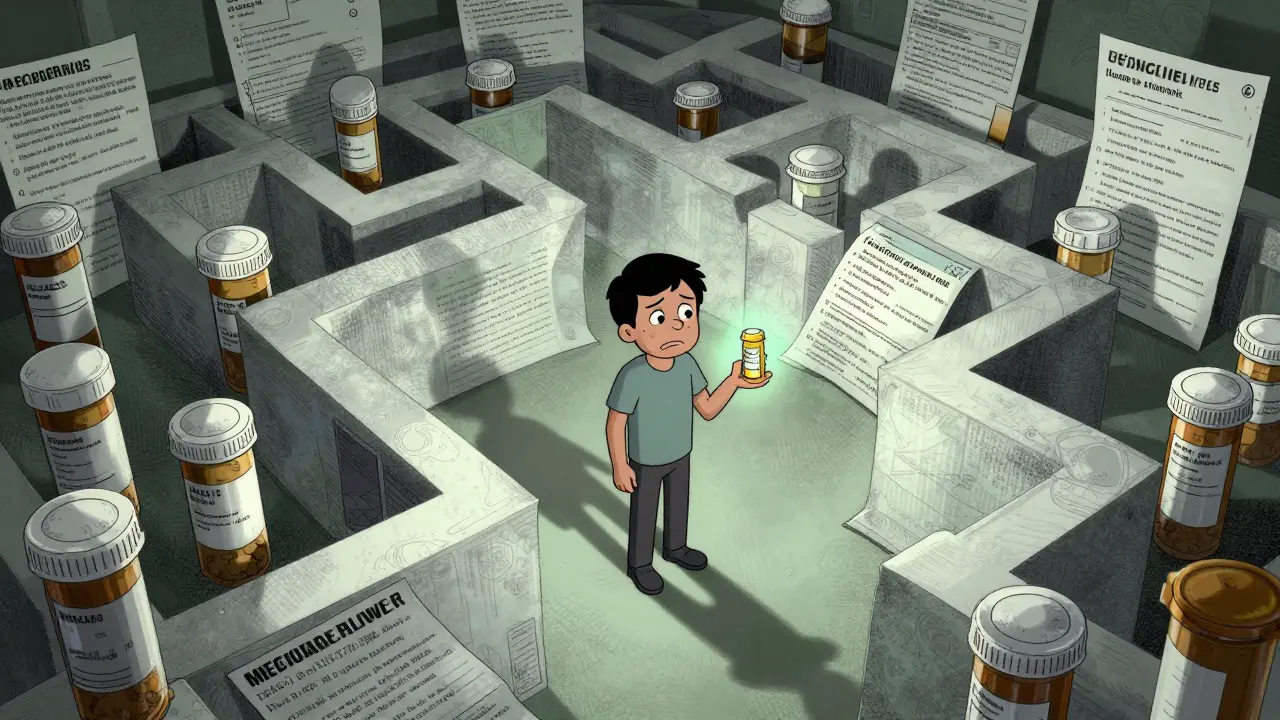
Prescription drugs are a major part of healthcare costs, but if you have Medicaid, a joint federal-state health insurance program for people with low income, the rules for covering generic medications can feel like a maze. You might assume that because generics are cheaper and widely available, every state covers them the same way. That is not true. While all 50 states and Washington D.C. cover outpatient prescription drugs, the specific requirements, cost-sharing rules, and approval processes vary wildly from one border to the next.
This guide breaks down exactly how Medicaid handles generic drug coverage across different states. We will look at what you pay, when pharmacists can swap your medication, and why some states make it harder to get certain prescriptions than others. Understanding these differences helps you navigate your benefits without unexpected bills or denied claims.
How Medicaid Generic Coverage Works Nationwide
At the federal level, the Affordable Care Act requires states to cover all outpatient drugs made by manufacturers participating in the Medicaid Drug Rebate Program (MDRP). This means most generic drugs are covered. However, there are exceptions. Federal law explicitly excludes certain categories, such as fertility drugs, cosmetic treatments, weight-loss medications, and sexual dysfunction drugs. Even though these exclusions exist federally, some states may choose to cover limited versions of these excluded drugs under strict criteria, while others follow the federal ban strictly.
The backbone of this system is the MDRP, established in 1990. It ensures that drug manufacturers pay rebates to the government for every generic drug dispensed to Medicaid beneficiaries. In fiscal year 2024, total Medicaid spending on generic drugs reached $38.7 billion. Despite representing over 84% of all drug claims by volume, generics accounted for less than 30% of total pharmacy expenditures. This highlights their cost-efficiency. The goal for states is to maximize the use of these lower-cost options to keep program budgets sustainable.
State-by-State Variations in Generic Substitution
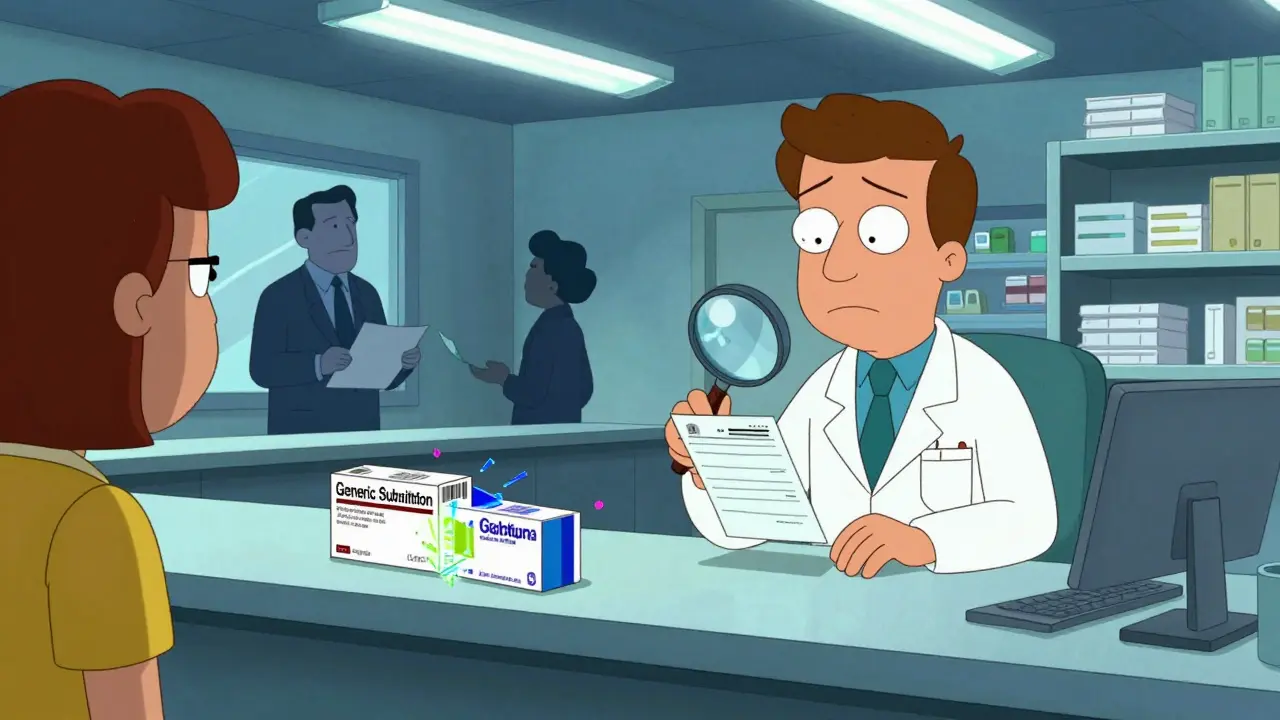
One of the biggest differences between states is whether pharmacists can automatically substitute a brand-name drug with a generic version. This process is called automatic generic substitution. According to the National Conference of State Legislatures (NCSL), at least 41 states require this substitution if the generic is therapeutically equivalent to the brand name.
However, "therapeutically equivalent" does not always mean identical in practice. For example, Colorado’s statute mandates that the generic must be prescribed unless the brand name is more cost-effective or the patient has been stabilized on the brand. Other states allow pharmacists to make this switch without calling the doctor, while 12 states permit pharmacist discretion without any physician notification. In contrast, 28 states require detailed documentation proving therapeutic equivalence before a substitution occurs. If you move from one state to another, your ability to get a generic instead of a brand-name drug could change overnight.
This variation creates challenges for patients who travel frequently or live near state borders. A pharmacist in Vermont, where community pharmacy participation in Medicaid dispensing is nearly 98%, might handle substitutions differently than a pharmacist in Texas, where participation rates drop to around 67%. Reimbursement rates for pharmacies often drive these participation levels, which indirectly affects patient access to convenient generic filling locations.
Understanding Formulary Tiers and Prior Authorization
Every Medicaid program uses a formulary-a list of approved drugs. Most states organize this into tiers. Typically, Tier 1 includes generic drugs, which have the lowest out-of-pocket costs. Tier 2 usually contains brand-name drugs with higher copays. But not all generics are treated equally. Some states maintain a Preferred Drug List (PDL). If a generic is on the preferred list, you likely won’t face extra hurdles. If it is non-preferred, you might need prior authorization.
Prior authorization (PA) is a process where your doctor must prove to the insurance plan that you need a specific drug before they will cover it. For generics, PA requirements vary significantly. California’s Medi-Cal program tends to have fewer prior authorization hurdles for standard generics compared to states like Colorado. Health First Colorado, for instance, requires clinical criteria for many medications. To get approval for certain gastrointestinal drugs, a patient might need to show they failed trials of three preferred proton pump inhibitors within six months. This adds time and administrative work for both patients and providers.
Primary care physicians report spending an average of 15 minutes per patient navigating these prior authorization requirements. This translates to thousands of dollars in administrative costs annually. For patients, delays in PA approvals can mean gaps in treatment. Some states aim to decide PA requests within 24 hours, while others take up to 72 hours. Knowing your state’s timeline can help you plan refills accordingly.
Copayment Limits and Out-of-Pocket Costs
How much do you pay for a generic pill? The answer depends on your income and your state’s rules. Federal guidelines set maximum copayments for Medicaid beneficiaries. For most enrollees with income at or below 150% of the federal poverty level, the copay for a non-preferred generic cannot exceed $8. However, many states charge less. Some states offer $0 copays for generics to encourage their use.
States are permitted to require higher copays for individuals earning above certain thresholds, but they must still adhere to federal caps. The KFF’s 2025 State Medicaid Pharmacy Copay Requirements report shows significant variation. In some states, a generic antibiotic might cost $1, while in others, it could be $4 or $8. These small differences add up over time for chronic conditions requiring daily medication.
It is also worth noting the recent changes in coordination with Medicare. Starting in 2025, individuals with Medicaid coverage qualify for Medicare Extra Help and can change drug coverage once per month. This dual-eligibility status can complicate cost calculations. If you have both Medicaid and Medicare Part D, your generic copays might be determined by the Medicare plan’s structure rather than just the state Medicaid rules. Always check which program is paying primary for each prescription.
| Policy Area | Federal Standard / Common Practice | Colorado Example | California Example |
|---|---|---|---|
| Generic Substitution | Required in 41+ states if therapeutically equivalent | Mandatory unless brand is more cost-effective or patient is stabilized | Streamlined substitution with fewer restrictions |
| Prior Authorization (Generics) | Varies by formulary tier and PDL status | Strict clinical criteria; e.g., failure of preferred alternatives required | Fewer PA requirements for standard generics |
| Max Copay (Low Income) | Up to $8 for non-preferred generics | Follows federal cap; varies by county/plan | Often lower than federal max; some $0 copays |
| Pharmacy Participation | National average ~85% | High participation due to favorable reimbursement | Variable; urban areas have better access |

Impact of Recent Policy Changes and Future Trends
The landscape of Medicaid drug coverage is shifting. In December 2024, the Centers for Medicare & Medicaid Services (CMS) proposed a rule requiring Medicaid programs to cover anti-obesity medications. If finalized, this would be a major expansion, potentially affecting millions of beneficiaries. Currently, weight-loss drugs are largely excluded from federal coverage, but states have been pushing for flexibility. This proposal highlights the tension between federal mandates and state budget concerns.
Another significant development involves inflationary rebates. Legislation discussed in early 2025 aims to exclude most generic drugs from the Medicaid Drug Rebate Program’s inflationary rebates. If enacted, this could reduce state rebate revenues by an estimated $1.2 billion annually. States might respond by tightening generic coverage parameters or increasing utilization management strategies to control costs.
We also saw the discontinuation of the Medicare Two Dollar Drug List Model in March 2025. This model tested $2 copays for essential generics. Only 20% of Medicare Part D beneficiaries had access to plans offering such favorable terms. While this was a Medicare initiative, the lessons apply to Medicaid. CMS research suggests that standardized low-cost generic formularies could improve medication adherence by over 18% for chronic conditions. States are watching these results closely as they design their own value-based purchasing arrangements. As of 2024, only nine states had implemented such models for generics, but interest is growing after successes in places like Michigan, which saw 11% cost reductions in diabetes care while maintaining high adherence rates.
Practical Tips for Navigating Your State’s Rules
To make the most of your Medicaid generic coverage, consider these steps:
- Check Your State’s Formulary Online: Most state Medicaid websites publish their current drug lists. Look for the "Preferred Drug List" or "Formulary" section. Identify if your generic is Tier 1 or if it requires prior authorization.
- Talk to Your Pharmacist About Substitution: Ask if your state allows automatic generic substitution. If you are on a brand-name drug, ask if a generic equivalent exists and if switching would save you money.
- Know Your Copay Caps: Verify the maximum copay for generics in your state. If you are charged more, contact your Medicaid managed care plan immediately.
- Prepare for Prior Authorizations: If your doctor prescribes a non-preferred generic, ask them to submit the prior authorization request promptly. Keep copies of all correspondence. Know how long your state typically takes to approve these requests.
- Monitor Supply Shortages: The FDA regularly updates its drug shortage list. In 2024, 17 Medicaid-reimbursed generic medications were on this list. If your generic is shorted, ask your doctor about therapeutically equivalent alternatives that are in stock.
Understanding these nuances empowers you to advocate for your health. Medicaid is not a one-size-fits-all program, especially when it comes to pharmacy benefits. By knowing your state’s specific rules, you can avoid surprise costs and ensure you get the medications you need efficiently.
Does Medicaid cover all generic drugs?
Most generic drugs are covered under Medicaid through the Medicaid Drug Rebate Program. However, federal law excludes certain categories like fertility drugs, cosmetic drugs, and weight-loss medications. Some states may cover limited versions of these excluded drugs under strict medical necessity criteria, but generally, these are not covered. Always check your state’s specific formulary for exclusions.
Can my pharmacist switch my brand-name drug to a generic?
In at least 41 states, pharmacists are required to substitute a brand-name drug with a therapeutically equivalent generic if one is available. However, this depends on state laws and your doctor’s instructions. Some doctors mark prescriptions "Dispense as Written," which prevents substitution. Additionally, if you have been stabilized on a brand-name drug, some states allow exceptions to continue the brand.
What is the maximum copay for a generic drug under Medicaid?
For most Medicaid beneficiaries with income at or below 150% of the federal poverty level, the federal maximum copay for a non-preferred generic drug is $8. Many states charge less, and some offer $0 copays for generics. Individuals with higher incomes may face higher copays, but these are still capped by federal regulations. Check your state’s Medicaid handbook for exact amounts.
Why do I need prior authorization for a generic drug?
Prior authorization is required if the generic drug is not on your state’s Preferred Drug List (PDL) or if it is considered non-preferred. This process ensures that the drug is medically necessary and that cheaper or safer alternatives have been tried first. For example, some states require proof that you failed other preferred medications before approving a specific generic. This helps control costs and promotes safe prescribing practices.
How do state variations affect me if I travel?
Medicaid is primarily designed for residents of a specific state. If you travel temporarily, your home state’s Medicaid plan usually covers emergency prescriptions. However, routine refills might not be covered out-of-state unless you have a multi-state Medicaid agreement or specific travel coverage. Long-term moves require transferring your Medicaid enrollment to the new state, which may have different formularies, copays, and prior authorization rules.
Will the new anti-obesity medication rule change my coverage?
The proposed CMS rule from late 2024 aims to require Medicaid coverage for anti-obesity medications. If finalized, this could expand access to these drugs for millions of beneficiaries. Currently, weight-loss drugs are largely excluded. Until the rule is fully implemented, coverage depends on individual state policies. Some states may voluntarily cover these medications under specific clinical guidelines even before federal mandates take effect.
